Growing up, our family holidays were simple and wholesome. We’d pack into a single rondavel in a national park—no partitions, no fuss—running through sprinklers for hours between climbing trees. Other times, we hiked the gravel paths of the Drakensberg making up songs as we went along.
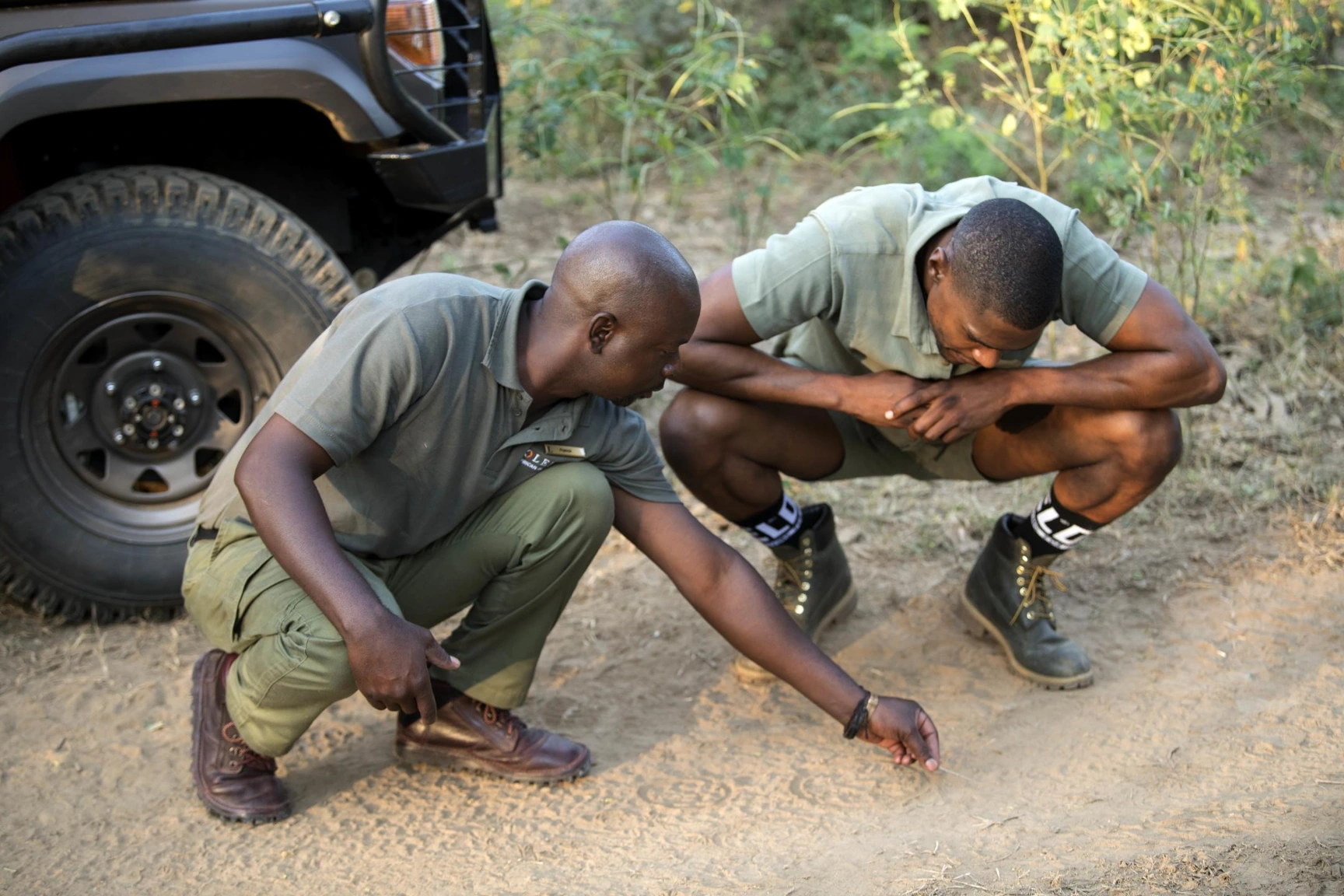
Learning about tracks at Lolebezi, Lower Zambezi National Park
Sure, as a child I sometimes wished for a trip to Disneyland like the other kids at school. But as an adult, I wouldn’t trade those memories for the world. Those holidays planted something far richer: a deep appreciation for nature—the true currency of wealth today.
Years later, I’ve been fortunate to experience the more ‘luxurious’ side of safaris. And yes, luxury can mean exquisite décor, generous rooms and world-class food and wine. But the real magic lies in what you can’t measure: location, the quality of your guide, the vegetation and views, traverse rights, how many people per vehicle and the positioning of the vehicle at a sighting. Sitting at a lodge where guides speak with quiet authority about the land and its rhythms is priceless. It’s transformative. It’s grounding. It’s beautiful. Out there, you reconnect—with the earth and with yourself.
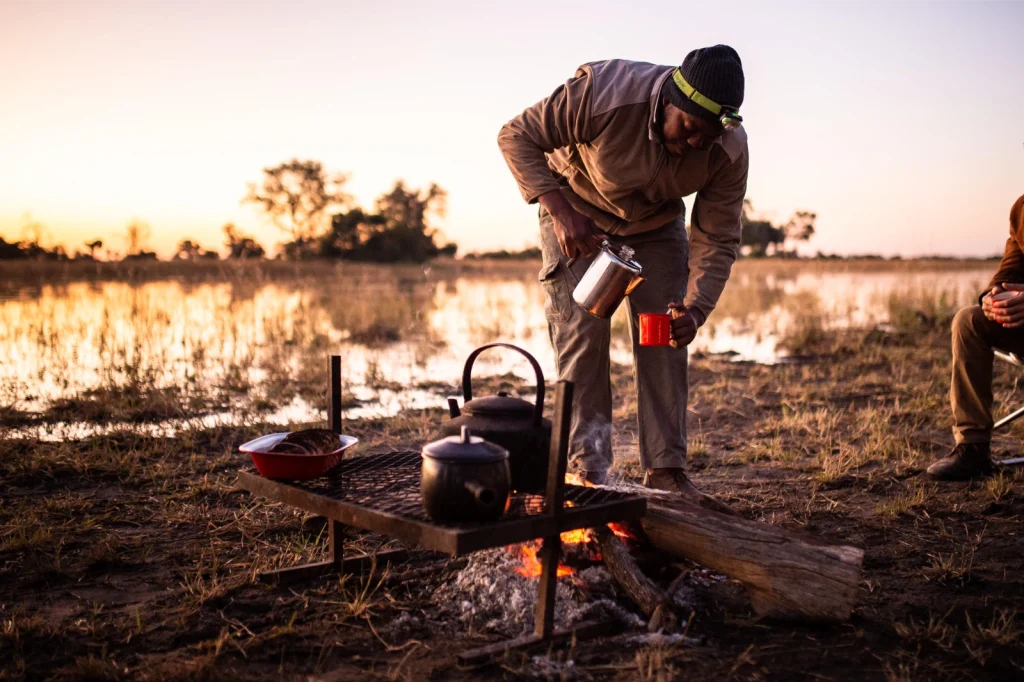
Morning coffee brewed over an open fire and mobile camp dining under ancient trees. Beagle Expeditions, Botswana.
Explaining this to first-time guests is always a challenge. How do you capture something that’s more a feeling than a fact? Seasoned safari-goers already know: no two safaris are alike. Landscapes shift, wildlife surprises, guides share new insights and the seasons paint the bush in ever-changing hues. Each journey offers the perspective and reflection you need at that exact moment.
For me, a safari is about stillness and reflection; luxury is not a thread count but the richness of the experience as a whole.
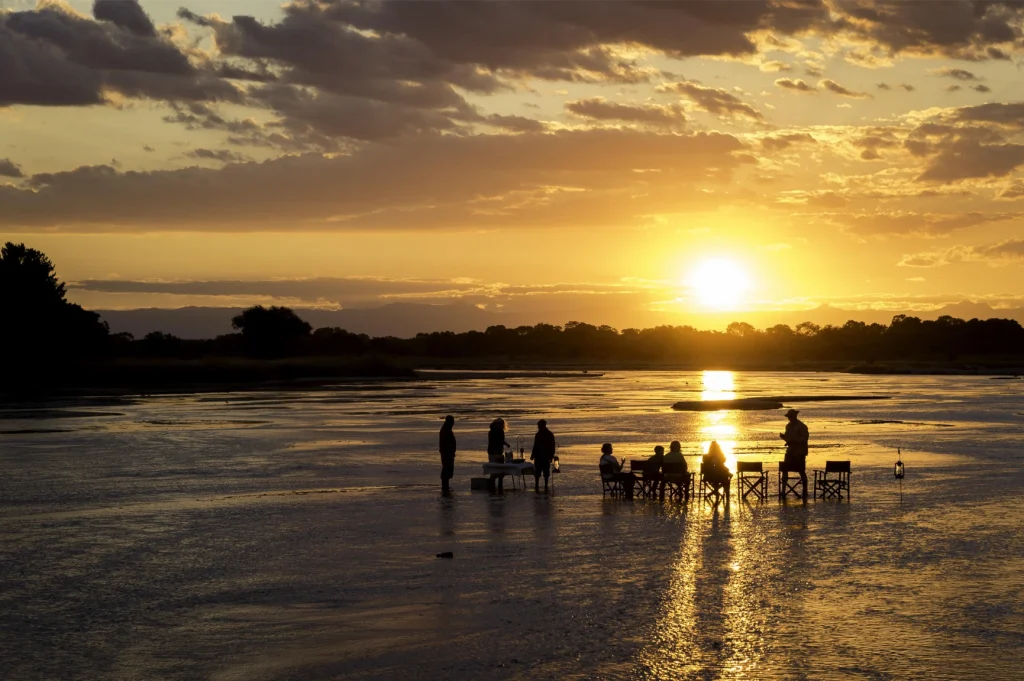
Starting and ending the day on the water with The Bushcamp Company, South Luangwa National Park.